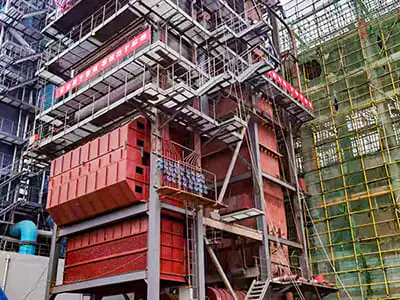
Selection and Application of Refractory Materials in Circulating Fluidized Bed (CFB) Boilers
Boiler Operating Conditions and Requirements for Refractory Materials
Circulating Fluidized Bed (CFB) boilers operate under high-temperature conditions in a complex environment characterized by high concentrations and high-velocity flows of fly ash particles, as well as exposure to thermal stresses and chemical corrosion. Such a complex operating environment imposes high demands on the refractory materials used in the boiler.
Performance Requirements for Refractory Materials
When selecting refractory materials, it is necessary to consider technical properties such as high strength, high abrasion resistance, resistance to chemical corrosion, and good thermal shock resistance. These performance indicators ensure stable boiler operation under conditions of high temperature, intense wear, and chemical attack.
Main Refractories for Fluidized Bed Furnaces
◆ Refractory Bricks for Fluidized Bed Furnaces
For lining CFB boilers, refractory bricks and refractory castables (castable masses) are widely used as the main refractory materials. Refractory bricks, such as high-alumina and fireclay types, are widely used in various boiler components due to their thermal stability, abrasion resistance, and resistance to molten slag attack. Commonly used types include high-alumina bricks, corundum bricks, fireclay bricks, and acid-resistant bricks. They are used in areas such as the return cyclone (loop seal), economizer walls, inner walls of the mixing chamber, flue gas ducts, and internal lining of chimneys, etc. Sillimanite brick is an ideal abrasion-resistant refractory for CFB boilers, especially for wall linings, areas with high abrasive wear, and locations with frequent temperature fluctuations.
◆ Application of Steel Fiber Reinforced Castables
In addition, steel fiber reinforced castables — refractory castables reinforced with heat-resistant steel fibers — have gained widespread use. The addition of steel fibers enhances the strength and thermal shock resistance of the material. Such materials are applied in high-temperature and wear-prone areas of the boiler, such as cyclones (cyclone separators), the dense phase zone of the furnace, and the furnace outlet. Steel fibers improve the strength and thermal shock resistance of the castable while maintaining volume stability, low thermal conductivity, and excellent resistance to molten slag penetration and chemical corrosion.
◆ Other Abrasion-Resistant Refractory Materials
For areas subjected to particularly intense abrasive wear, such as the water-cooled air chamber (water-cooled windbox), slag cooler, and ignition air ducts of the loop seal, abrasion-resistant refractory castables without steel fiber addition are recommended. Materials suitable for such high-wear zones include abrasion-resistant refractory castables without steel fibers, abrasion-resistant plastic refractories (plastic masses), corundum-silicon carbide castables, and micro-expanding plastic refractories. These materials offer excellent volume stability, high strength, abrasion resistance, thermal shock resistance, and resistance to chemical corrosion, ensuring long-term and reliable operation of the boiler in these components.
Abrasion-resistant plastic refractories are also an important material for repair work. They are manufactured from high-alumina raw materials, corundum, and mullite, combined with special high-temperature inorganic binders, and formed through mixing and extrusion. This material features good plasticity, ease of application, high strength, abrasion resistance, and good thermal shock resistance, making it ideal for repairing CFB boilers and for localized ramming (lining) work. Corundum-based and low-cement castables are ideally suited for lining complex shapes and for repair work.
Finally, micro-expanding plastic refractories are worth mentioning as another recommended type of refractory material. At room temperature, they exhibit high plasticity and strong adhesion; after natural drying, they achieve high strength; at high temperatures, they demonstrate micro-expansion, which provides excellent sealing performance, and they are also easy to apply. These characteristics make them an ideal choice for many refractory applications.
Our Plant’s Experience and Expertise
Our plant has 35 years of experience in the production, design, and installation of refractory materials for Circulating Fluidized Bed (CFB) equipment. As a leading enterprise in the industry, RS Refractory consistently focuses on developing refractory solutions that feature high performance, long service life, and environmental safety. The company’s innovative products demonstrate outstanding performance under the extreme operating conditions of CFB boilers, significantly improving equipment operational efficiency and material durability, providing power generation enterprises with key technical support for reducing energy consumption, lowering costs, and ensuring stable operation.